
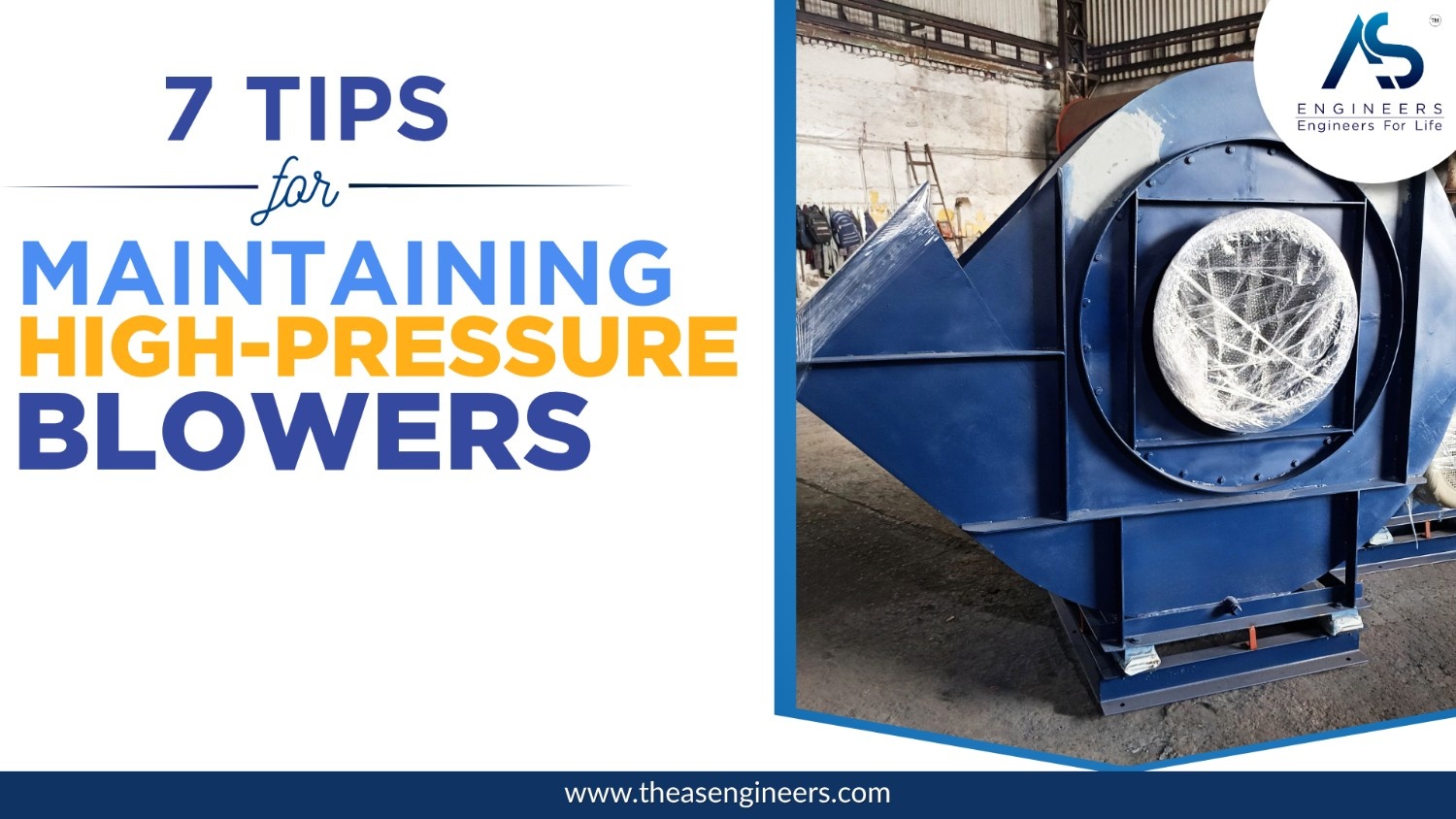
High pressure blower maintenance should focus on airflow, pressure, vibration, lubrication, alignment, electrical load, and site conditions. A blower rarely fails without warning. Most problems begin as small changes in sound, temperature, vibration, current, dust build-up, or pressure drop.
A high-pressure blower works under continuous mechanical and process load. In industries such as wastewater treatment, cement, chemical processing, boilers, bag filters, spray dryers, furnaces, food processing, and pollution control, the blower is not just an accessory. It is often the equipment that keeps combustion, suction, aeration, drying, exhaust, or dust collection stable.
The mistake many plants make is treating blower maintenance as a housekeeping task. Cleaning is important, but it is not enough. A proper maintenance routine must also check whether the blower is still operating close to its original duty point. If the duct is choked, the filter is loaded, the impeller is coated, or the bearing is heating, the blower may still run, but the process has already started losing efficiency.
Before making changes to motor HP, damper position, belt tension, or impeller design, confirm the basics of high pressure blower design and the actual site operating condition. Maintenance without operating data becomes guesswork.
Keep the Inlet, Impeller, Housing, and Duct Path Clean
Answer capsule: Cleaning is the first maintenance step because dust, fines, fibers, fumes, and sticky particles change the blower’s airflow and pressure behavior. A dirty blower consumes more energy, vibrates more, and can lose process performance even when the motor appears normal.
For high pressure blower maintenance, cleaning must cover more than the outer casing. The maintenance team should inspect the inlet screen, duct connection, impeller surface, casing inner area, drain points, flexible connections, and nearby filter or baghouse section.
In dusty plants, material can settle unevenly on the impeller. That creates imbalance. In humid or corrosive environments, dust can stick harder and gradually reduce clearance. In hot air systems, deposits can bake onto surfaces. In bag filter and pollution-control applications, fine dust load can change faster than the original maintenance schedule assumed.
Do not use aggressive cleaning methods without checking the material of construction, coating, seal arrangement, and impeller type. A radial blade blower handling dust, a backward curved blower used for clean air, and a high-temperature plug blower near furnace duty do not need the same cleaning method.
Use this practical cleaning logic:
| Area to Check | What to Look For | Maintenance Risk If Ignored |
|---|---|---|
| Inlet screen or filter | Dust, fibers, choking, foreign material | Low airflow and motor overload risk |
| Impeller | Uneven dust layer, corrosion, wear marks | Vibration, imbalance, bearing stress |
| Housing | Deposits, rubbing marks, leakage points | Reduced efficiency and unsafe operation |
| Ducting | Blockage, loose joints, poor support | Pressure loss and unstable suction |
| Drain points | Moisture, sludge, chemical residue | Corrosion and contamination |
For a deeper supporting topic, connect this page with your article on regular cleaning for high-pressure blowers.
Check Bearings, Lubrication, Belt Drive, and Coupling Condition
Answer capsule: Bearings, lubrication, belts, and couplings decide whether the blower runs smoothly under load. Wrong grease, over-lubrication, loose belts, worn pulleys, or poor coupling alignment can turn a healthy blower into a vibration problem.
A blower bearing does not fail only because it is old. It often fails because of contamination, incorrect lubrication, misalignment, excessive belt pull, high operating temperature, or vibration transferred from the base frame.
Maintenance teams should record bearing temperature trends, grease interval, grease type, belt condition, pulley alignment, coupling condition, and shaft movement. Do not mix grease types casually. Do not increase lubrication frequency blindly if the bearing is heating. Excess grease can also create heat and seal issues.
For belt-driven blowers, check belt tension after shutdown and isolation. A loose belt slips and reduces airflow. An overtight belt increases bearing load. Misaligned pulleys create edge wear and vibration. If belts are changed, inspect the pulley groove condition instead of replacing belts only.
For direct-coupled blowers, coupling alignment is critical. A small alignment issue may not stop production today, but it can shorten bearing and seal life. If the blower was recently moved, foundation bolts were tightened, motor was replaced, or bearings were changed, alignment should be checked again.
When the application involves high static pressure or abrasive dust, the impeller and drive arrangement must match the duty. AS Engineers’ high pressure radial blade blower is one example where heavy-duty pressure and process conditions require proper maintenance discipline.
Track Vibration, Noise, Temperature, and Motor Current Together
Answer capsule: A single reading rarely tells the full story. The strongest maintenance signal comes from comparing vibration, noise, bearing temperature, motor current, airflow, and pressure against normal operating history.
High vibration is one of the most important early warnings in centrifugal blower maintenance. It may come from impeller imbalance, foundation looseness, bearing wear, coupling misalignment, belt tension error, shaft issue, duct strain, or material build-up. The wrong response is to replace the bearing immediately without checking the root cause.
Noise should also be treated carefully. A blower can sound louder because of mechanical wear, but it can also sound different because the system resistance has changed. A blocked inlet, closed damper, duct leakage, or damaged impeller can change the acoustic signature.
Record these values during routine checks:
| Parameter | What a Change May Indicate | First Action |
|---|---|---|
| Vibration | Imbalance, misalignment, bearing issue, loose base | Compare with baseline and inspect mounting |
| Bearing temperature | Lubrication issue, overload, contamination | Check lubrication and operating load |
| Motor current | Overload, duct blockage, damper issue, wrong duty point | Compare with nameplate and process condition |
| Airflow or suction | Filter choking, duct leak, impeller fouling | Inspect inlet, outlet, and process path |
| Noise | Mechanical wear, airflow restriction, rubbing | Stop and inspect if sudden or severe |
For servicing work, isolate electrical and stored energy before opening guards or touching internal components. OSHA’s lockout/tagout standard covers maintenance where unexpected startup or stored energy release could injure workers.
If your team is already seeing unstable readings, connect this maintenance article with your guide on troubleshooting common issues with high-pressure blowers.
Build a Maintenance Schedule Based on Duty, Not Calendar Alone
Answer capsule: A blower used for clean air does not need the same schedule as a blower used for hot gas, sticky fumes, abrasive dust, or high-humidity exhaust. Maintenance frequency should be based on duty severity, process risk, and historical readings.
Many plants ask, “How often should we service a high-pressure blower?” The honest answer is application-specific. A blower in a clean ventilation line may run for long periods with routine inspection. A blower connected to a bag filter, furnace, scrubber, dryer, or dusty process may need much closer monitoring.
Use the table below as a practical starting point, then adjust based on plant history and OEM guidance.
| Frequency | Maintenance Focus | Practical Notes |
|---|---|---|
| Every shift or daily | Sound, vibration feel, bearing temperature, motor current, visible leakage | Best for critical blowers and continuous-duty plants |
| Weekly | Inlet condition, dust build-up, belt condition, fastener looseness | Increase frequency in dust-heavy applications |
| Monthly | Lubrication record, pulley or coupling check, duct support, damper position | Compare with previous readings |
| Quarterly | Alignment, foundation, impeller inspection where accessible, electrical terminal check | Plan during controlled shutdown |
| Annual or shutdown | Detailed inspection, balancing need, bearing condition, impeller wear, performance test | Best time for service team involvement |
A good maintenance schedule should include acceptance limits, not just task names. “Check vibration” is weak. “Record vibration and compare with baseline” is useful. “Clean inlet” is weak. “Clean inlet and verify pressure recovery” is better.
For efficiency-focused maintenance, link this routine with 10 tips for maximizing efficiency with high-pressure blowers.
Do Not Ignore Operating Conditions Around the Blower
Answer capsule: Many blower problems are created outside the blower. Duct restrictions, high dust load, humidity, temperature, altitude, wrong damper use, poor foundation, and process changes can overload even a properly manufactured blower.
A blower must be maintained as part of a system. The inlet, outlet, ducting, filter, scrubber, cyclone, bag filter, chimney, damper, motor, base frame, and process equipment all affect blower behavior.
For example, in a bag filter system, pressure drop can rise as bags load with dust. In a furnace system, temperature can change material expansion and bearing environment. In a wastewater aeration system, moisture and corrosive gases can influence material selection and maintenance intervals. In a spray dryer or hot air generator application, temperature and dust carryover require closer inspection.
Before blaming the blower, check whether the process has changed:
| Site Change | Why It Matters |
|---|---|
| Increased dust load | More impeller coating and filter pressure drop |
| Higher inlet temperature | Bearing, seal, and material stress may increase |
| More humidity or fumes | Corrosion and deposit formation risk increases |
| Duct modification | System resistance may change |
| Damper adjustment | Blower may move away from expected duty point |
| New process material | Abrasion, sticking, or corrosion behavior may change |
This is why blower selection and maintenance are connected. If the blower was not selected for the real operating condition, maintenance will only control symptoms. Your team should review key factors for choosing a high-pressure blower when repeated maintenance issues appear.
For plant teams comparing replacement or retrofit options, AS Engineers’ industrial centrifugal blowers range includes application-specific designs for different airflow, pressure, temperature, and dust conditions.
Know When to Call a Blower Service Team Instead of Continuing In-House
Answer capsule: In-house maintenance is suitable for routine cleaning, visual inspection, lubrication records, and basic checks. Specialist service is needed when vibration rises repeatedly, bearings fail early, airflow drops after cleaning, impeller wear is visible, or alignment and balancing are uncertain.
A serious buyer mistake is delaying expert service until the blower fails. If the blower is critical to production, the better approach is condition-based action. Call for inspection when the trend changes, not after the shaft, impeller, bearing, or casing is damaged.
Escalate to a blower specialist if you notice:
- Vibration returning soon after cleaning or bearing replacement
- Repeated belt failure or pulley wear
- Unusual rubbing sound from casing
- Bearing temperature rising without clear lubrication cause
- Motor current rising after process changes
- Airflow loss even after filter and duct cleaning
- Visible impeller wear, corrosion, cracks, or heavy deposits
- Foundation or base frame movement
- Need for on-site balancing or alignment
- Requirement for retrofitment instead of full replacement
AS Engineers supports blower performance analysis, engineering surveys, retrofitment, repair, material identification, on-site alignment, on-site balancing, customized engineering, AMC, and site-based design. For service-led support, use the AS Engineers centrifugal blower services page as the primary action link.
If impeller design or wear is part of the issue, also review AS Engineers’ guide on blower and fan impeller selection. The impeller is often where airflow, pressure, dust behavior, and maintenance risk meet.
For broader internal support, this article should connect with your existing page on the benefits of proper maintenance for high-pressure blowers and your article on testing high pressure blowers for quality and performance.
FAQs
1. How often should a high pressure blower be maintained?
High pressure blower maintenance frequency depends on duty severity. Clean-air blowers may need routine scheduled checks, while blowers handling dust, heat, moisture, fumes, or corrosive gases need closer inspection. Track vibration, bearing temperature, current, airflow, and pressure trends to decide the real interval instead of using calendar dates only.
2. What is the most common maintenance mistake in industrial blowers?
The most common mistake is cleaning the blower externally but ignoring the system condition. A choked filter, duct leakage, wrong damper position, dust-coated impeller, loose foundation, or misaligned drive can reduce performance even when the blower looks clean from outside.
3. Why does a high pressure blower start vibrating?
A high pressure blower may vibrate because of impeller imbalance, dust build-up, bearing wear, coupling misalignment, loose mounting bolts, belt tension error, duct strain, or foundation issues. Do not replace bearings repeatedly without checking root cause. Vibration should be compared with baseline data and inspected systematically.
4. Can regular maintenance improve blower efficiency?
Yes, regular maintenance can protect blower efficiency by keeping the inlet clear, reducing impeller deposits, maintaining correct belt or coupling condition, controlling vibration, and preventing avoidable pressure losses. For best results, combine cleaning with airflow, pressure, current, and vibration checks.
5. When should I replace a blower instead of repairing it?
Replacement may be better when the blower is incorrectly sized, casing or impeller damage is severe, the process duty has changed beyond the original design, repair cost is repeatedly increasing, or efficiency losses are affecting production. Before replacement, ask for a performance analysis and retrofitment review.
A high-pressure blower should not be maintained only when it becomes noisy, hot, or unstable. The right approach is to track small changes early, connect maintenance with operating conditions, and involve a blower specialist before repeated failures damage the system.
If your plant is facing vibration, airflow loss, overheating, bearing failure, impeller wear, or repeated downtime, AS Engineers can review the blower condition and suggest practical next steps through centrifugal blower services.

Karan Dargode is Head of Operations at AS Engineers, where he supports manufacturing, assembly, commissioning, and operational execution for industrial equipment including paddle dryers, sludge dryers, centrifugal blowers, industrial fans, and pollution control systems. His role connects shop-floor manufacturing discipline with practical site commissioning, EHS compliance, and process reliability for industrial clients.